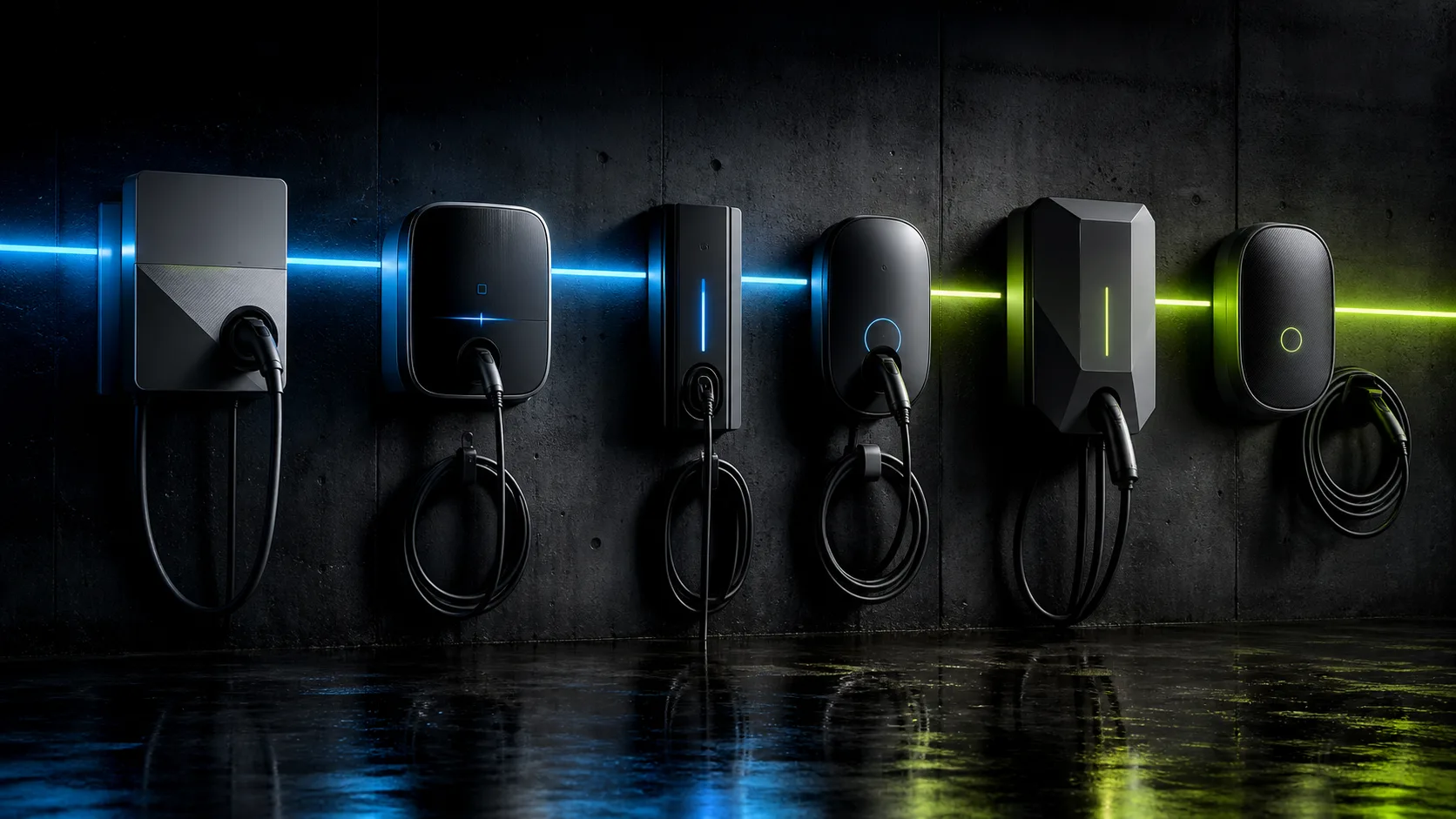
The best home EV charger for most UK drivers is a 7kW smart unit with reliable scheduling and a solid app. Ohme, Hypervolt, Wallbox and Easee all do this well — the right pick depends on tariff integration and tethered vs untethered.
Buying a home EV charger in 2026 is mostly a choice between six brands that dominate UK driveways: Ohme, Hypervolt, Wallbox, Easee, Pod Point and Andersen. The good news is that the hard part — wattage — is already decided for you. Nearly every UK home has a single-phase supply, which caps charging at 7kW, and a 7kW unit fully refills almost any EV overnight. So this isn't a horsepower race; it's a question of app quality, smart-tariff support, whether you want a tethered cable, and how the unit looks on your wall. Get those right and you'll barely think about the charger again.
It helps to know what a fair price looks like before you shop. Our live UK cost index puts the all-in 7kW home installation at an average of £1,087, drawn from real fixed-price quotes ranging from about £775 to £1,404 depending on the unit and your property. For wider market context, Checkatrade pegs a typical install at around £1,000, Reddit owners report a real-world floor near £999, and energy suppliers such as E.ON Next advertise packages from about £1,272 — figures we cite as attribution, not as our own quotes. The takeaway: an all-in cost of roughly £900–£1,200 is normal; well below usually means a basic unit or a short, easy cable run, and well above usually means a long run or a consumer-unit upgrade.
How to choose: the four things that actually matter
Once 7kW is a given, four decisions separate a charger you love from one you tolerate. First, smart-tariff integration — the single biggest money saver. A charger that talks to a time-of-use tariff (think cheap overnight rates) automatically shifts charging into the cheapest hours, which can roughly halve your fuel cost versus charging at the standard rate. Second, tethered vs untethered: a tethered unit has the cable permanently attached for grab-and-go convenience, while an untethered unit keeps the wall box small and tidy and lets you swap cable lengths or future-proof for a different car. Third, app and reliability — you'll touch the app far more than the cable, and a flaky app or a unit that drops its connection is the most common owner complaint. Fourth, design and size, which matters more than people admit when the box lives on the front of your house for a decade.
Ohme — best for smart-tariff drivers
Ohme is the tariff specialist. The compact untethered Ohme ePod and the tethered Ohme Home Pro are both 7kW and plug directly into time-of-use tariffs, so the car charges automatically when electricity is cheapest — exactly the behaviour that pays back a smart charger. If you're on (or moving to) an EV tariff, Ohme's integration is as deep as it gets. As market context, Smart Home Charge listed the ePod with standard installation at £932.40 and Ohme's own site at £949 in mid-2026; Octopus bundled it from £1,149 with support. See the full specs and install notes on our Ohme charger page.
Hypervolt — best looking, solar-friendly
Hypervolt is the design-led British option. The Hypervolt Home 3 and Home 3 Pro pair a glass front and a customisable LED light ring with proper substance: tariff scheduling plus solar integration, so panel owners can charge on surplus generation, available tethered or untethered. It's the unit to pick if you want the charger to look intentional rather than industrial. For context, Smart Home Charge listed the Home 3 Pro with standard install at £1,074.90 in mid-2026. More detail on the Hypervolt charger page.
Easee & Wallbox — best for tight or shared supplies
Both shine when your electrical supply is the constraint. The untethered Easee One is one of the lightest, smallest 7kW units you can fit and is strong on dynamic load management — useful on shared or three-phase supplies — listed by Smart Home Charge around £918 with installation. The tethered Wallbox Pulsar Plus is among the smallest chargers on the market, and its Power Boost feature watches your home's total demand to avoid tripping the main fuse, which is handy in older properties; Wallbox installs are quoted per home rather than from a fixed retail figure, so we don't attach a number to it. See the Easee charger and Wallbox charger pages for specs.
Pod Point & Andersen — the safe pick and the premium pick
Pod Point is the no-drama default: the Solo home unit is so widely installed that almost every UK electrician is fluent with it, which tends to make booking and aftercare painless. Pod Point listed the Solo 7kW from £999 untethered and £1,049 tethered, including standard installation, in mid-2026 — note this is the home unit, not its public charging stations. Andersen sits at the other end: a premium, design-led charger that hides the cable inside the unit with customisable fascias, with Smart Home Charge listing the Quartz around £1,119.66 and the A3 up to £1,404.30 installed. You're paying for the look and build as much as the electronics. Compare both on the Pod Point charger and Andersen EV charger pages.
Which home EV charger should you buy?
For most UK drivers the honest answer is that a 7kW smart charger from any of these six will serve you well, so let your priority pick the winner. Choose Ohme if a smart EV tariff drives your decision; Hypervolt if you want the best-looking unit or you have solar; Easee or Wallbox if your supply is tight, shared or three-phase, or you want the smallest possible box; Pod Point if you value a proven, easy-to-service unit above all; and Andersen if design is worth a premium. Decide tethered vs untethered based on your driveway, then sanity-check any installer's all-in quote against the live UK average on our cost index — if it lands near £1,087, you're paying a fair price. If you're still weighing speed, our 7kW EV charger guide explains why 7kW is the right call for nearly every home.