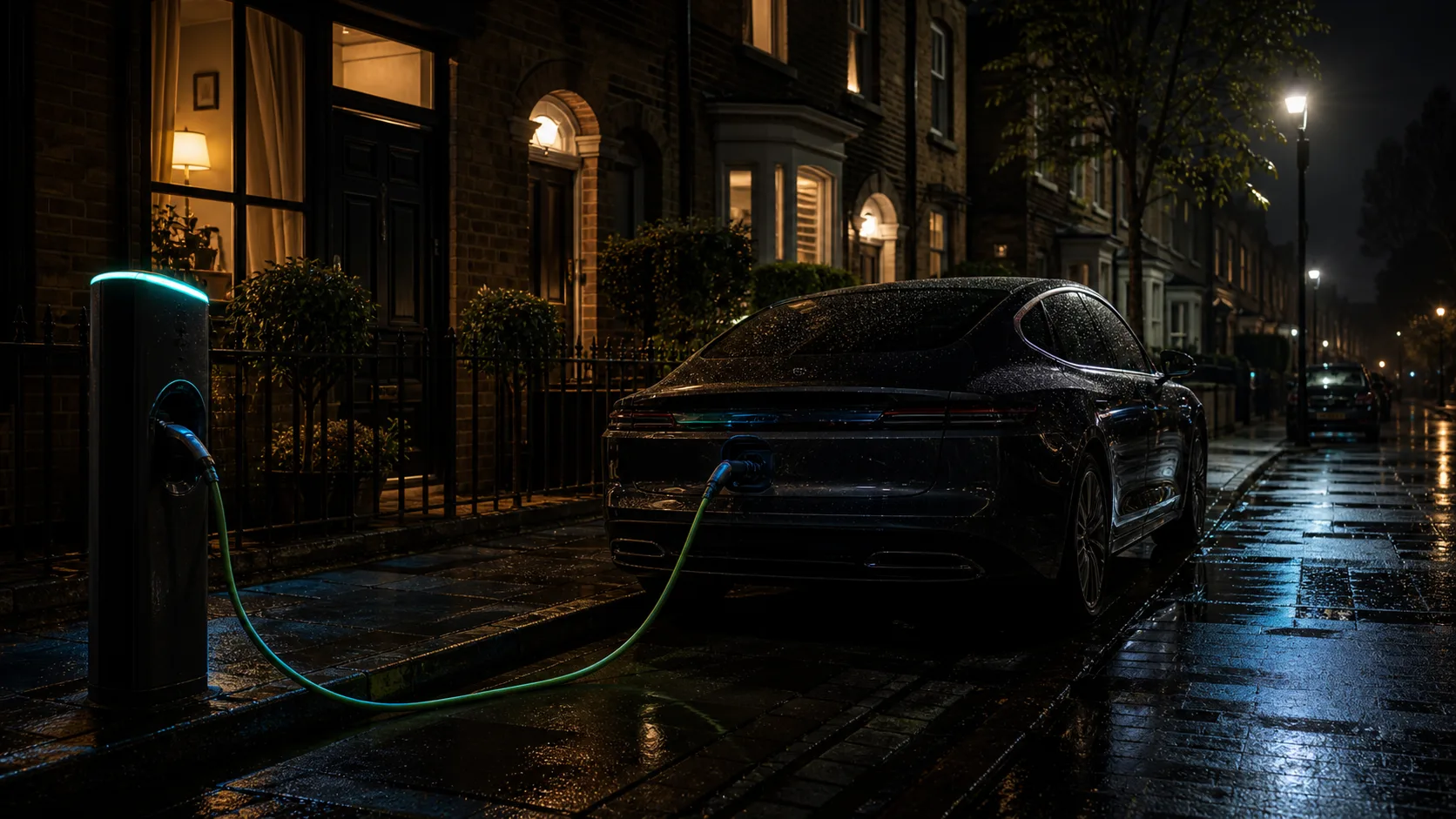
From 2026 the EV chargepoint grant is aimed at renters and flat owners — not driveway-owning homeowners. Eligible applicants can take a fixed amount off the cost of a home install, claimed by an approved installer.
If you rent your home or own a flat, 2026 is the year the EV chargepoint grant was rebuilt around you. The grant that once covered driveway-owning homeowners was wound down — but the support for people without their own private driveway has been kept and sharpened. The headline: up to £500 per chargepoint socket, applied directly to your installation invoice by an approved installer. This guide explains exactly who qualifies, how the money reaches you, what you'll pay after the grant, and how to claim it without getting caught out.
Interest in this route has exploded — searches for EV charger grant for renters are up roughly 600% year on year — largely because renters and flat dwellers were, for a long time, the group most locked out of cheap home charging. The 2026 rules are the correction. Throughout this guide, every market price is clearly attributed to its source, and every "average" we quote is pulled live from our own UK cost index rather than invented.
Who qualifies for the 2026 EV charger grant?
The 2026 chargepoint grant is deliberately narrow. It targets three overlapping groups who share one problem — no private driveway to call their own:
Renters in any tenure. If you rent a house or flat (private or social) and have somewhere to install a chargepoint with off-street or dedicated parking, you can be eligible — provided your landlord or freeholder gives written consent for the work.
Flat owners. If you own a leasehold flat with an allocated parking space, or access to communal parking, you fall squarely in scope. You'll typically need the freeholder's or management company's sign-off because the work affects the building.
People relying on on-street or shared parking. Where there's no off-street space at all, the grant pairs with local-authority on-street provision (lamp-post chargers, cross-pavement channels). That's a related route we cover in our companion guide on the on-street grant.
The group that is no longer eligible is the one the grant used to serve: owner-occupiers of houses with a private driveway. If that's you, the grant won't apply — but a standalone fixed-price install is still well within the live UK average shown below, and our cost guide breaks down what you'd actually pay.
How much is the grant worth, and what will you actually pay?
The grant is worth up to £500 per socket. "Per socket" matters: a twin-socket unit, or a second chargepoint, can each attract their own grant, subject to the scheme's caps. Crucially, this is a discount, not a cash refund — the installer deducts it from your bill, so you never front the full amount and wait to claim it back.
So what's the net cost? Our live UK cost index currently puts the average 7kW home install at £1,087, based on real tracked quotes. Knock £500 off that and an eligible renter or flat owner is typically looking at a few hundred pounds out of pocket for a smart 7kW charger — sometimes less, depending on your cable run and consumer unit.
For market context, independent and provider pricing lands in a similar band. Provider "from" prices we track sit around £949–£999 (Octopus and Pod Point's published starting prices); Checkatrade has cited a typical home install of around £1,000; E.ON has advertised installs from £1,272; and EV-owner threads on Reddit commonly quote a real-world floor near £999. One retailer, evec, has listed a charger-plus-install package at £449.99 if you're grant-eligible — which lines up with the wider pattern that a grant-backed install often lands around £500 all-in. Treat those as the market backdrop, not our quote: your exact figure depends on your home, and our calculator prices it for you.
How to claim it: the step-by-step
The single most important rule is that you do not apply to the government yourself. The grant is administered through the installer. Here's the order of play:
1. Confirm eligibility. Check your property type and parking situation against the scheme. Our 30-second grant checker on the grant hub flags the obvious yes/no before you spend time gathering quotes.
2. Get written permission (renters and flat owners). Renters need landlord consent; leaseholders usually need the freeholder or managing agent to approve work that affects the building or communal areas. Get it in writing — both the installer and the scheme will ask for it.
3. Choose an OZEV-approved installer. Only installers on the approved list can claim the grant. A "normal" electrician who isn't approved can fit a charger, but the grant won't apply to that job. This is the most common reason people miss out.
4. The installer claims and deducts. Your approved installer submits the grant claim and applies the £500 directly to your invoice. You pay the reduced balance — no forms, no waiting for a refund.
5. Keep your paperwork. Hold on to the installation certificate, the consent letter and the invoice showing the grant deduction. It's useful for your records and for any landlord or freeholder follow-up.
Scotland, Northern Ireland, business and homeowner schemes
The chargepoint grant described here is the GB-wide consumer route, but the picture varies by nation and situation — which is why people search for it by region:
Scotland has historically run additional support through its own energy body alongside the UK grant, so it's worth checking the Scottish scheme on top of the chargepoint grant, as the two can interact.
Northern Ireland arrangements differ from the rest of the UK; confirm the current NI position before assuming the same rules apply.
Businesses and landlords have separate, parallel routes — workplace and infrastructure schemes, plus a landlord-specific allowance — rather than the consumer renter grant; our landlords guide covers that path. Homeowners with a driveway are, as noted, outside this grant entirely. Always verify the live rules on gov.uk before booking, because scheme details and caps are updated periodically.