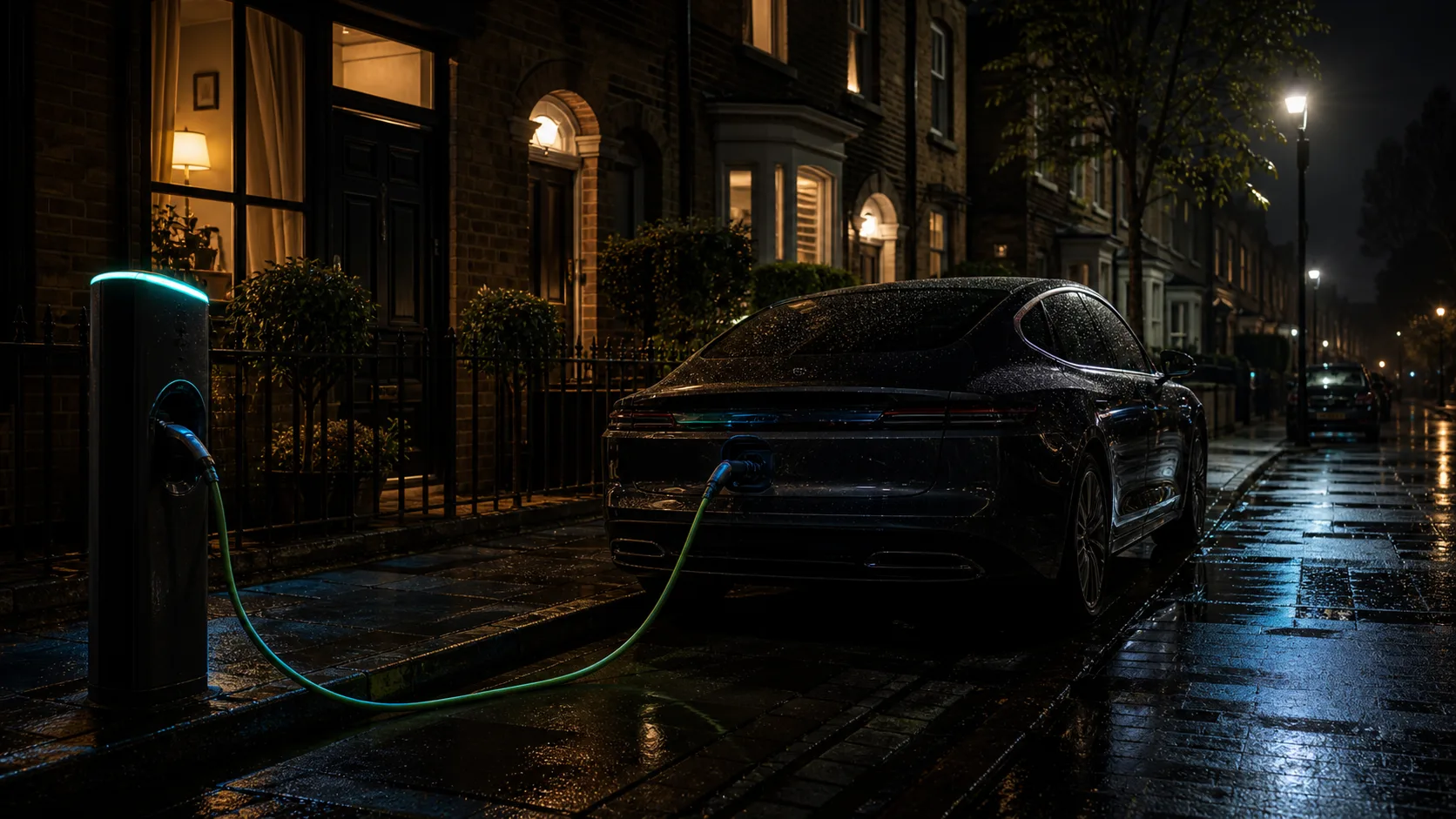
You qualify for the £500 EV chargepoint grant if you rent your home, own a flat, are a residential landlord, rely on on-street parking, or are a business. You do not qualify if you own a house with a private driveway — that group was removed from the scheme.
Almost every question we get about the EV chargepoint grant boils down to one thing: do I actually qualify? The rules changed, a lot of outdated guidance is still floating around online, and the difference between eligible and not eligible is worth £500 on your invoice. This guide gives you the answer first, then the detail.
The short version: the grant is now aimed at people who don't have their own private driveway. If you rent, own a flat, let property to tenants, or depend on on-street parking, you're in scope. If you own a house with a driveway, you're not — and no amount of shopping around will change that, because it's a scheme rule rather than an installer preference.
The eligibility list: who qualifies and who doesn't
✅ Renters (private or social). If you rent a house or flat and have somewhere to install a chargepoint, you can claim — with written landlord consent.
✅ Flat owners. Leaseholders with an allocated parking space or access to communal parking are squarely in scope. You'll usually need the freeholder or managing agent to approve the work.
✅ Residential landlords. Landlords can claim for properties they let, which is a separate allowance from the tenant-facing route.
✅ Households with on-street parking. Where there's no off-street space, the grant works alongside local-authority on-street provision such as lamp-post chargers and cross-pavement channels.
✅ Businesses. Workplaces and commercial premises have their own parallel schemes with separate caps.
❌ Homeowners of houses with a private driveway. This is the group that used to be the main audience of the old scheme, and the one most likely to arrive expecting money off. Under the current rules you're excluded. It isn't a technicality you can work around — if an installer offers to "apply the grant anyway", treat that as a red flag.
How much is it worth, and how long does it last?
The grant is worth up to £500 per chargepoint socket. That figure is current: it rose from the previous £350 on 1 April 2026, and the Department for Transport and the Office for Zero Emission Vehicles have confirmed the higher rate runs until March 2027.
"Per socket" is worth reading carefully. A twin-socket unit, or a second chargepoint at the same property, can each attract their own grant subject to the scheme's caps — relevant if you run two EVs or you're a landlord fitting several units.
For context on what you'd pay after the grant: our live UK cost index currently puts a typical 7kW home install at £1,087, drawn from real tracked prices rather than estimates. Take £500 off that and an eligible household is generally a few hundred pounds out of pocket — though your own figure depends on your cable run and whether your consumer unit needs work.
How to claim: you don't apply, your installer does
The most common way people miss out isn't failing the eligibility test — it's using the wrong installer. The grant is administered through OZEV-approved installers only. A perfectly competent electrician who isn't on the approved list can fit your charger, but the grant cannot be applied to that job afterwards.
1. Check you're on the eligible list above. Our 30-second grant checker gives you a yes/no before you spend time collecting quotes.
2. Get written permission if you rent or lease. Renters need landlord consent; leaseholders usually need the freeholder or managing agent to sign off work affecting the building. Both the installer and the scheme will ask to see it.
3. Choose an OZEV-approved installer. Confirm their approved status before you book, not after.
4. They claim, you pay the reduced balance. The £500 comes off your invoice directly. There is no form for you to submit and no refund to wait for.
5. Keep the paperwork. Installation certificate, consent letter and the invoice showing the deduction.
Not eligible? What you can actually do
If you're a driveway-owning homeowner, the grant is closed to you — but that doesn't mean you're stuck paying a premium. Three things genuinely move your price:
Shorten the cable run. Distance from your consumer unit to the charge point is the biggest single variable on most quotes. Mounting the unit closer to the board, even by a few metres, can matter more than which brand you pick.
Compare real installed prices, not headline unit prices. Our charger comparison tracks what units actually cost installed, which is a different number from the manufacturer's "from" price.
Check provider deals. Some energy suppliers bundle installation with a tariff. These are commercial offers rather than grants, so read the tie-in terms — but they can beat a standalone install.
Scheme rules and caps are reviewed periodically, so always confirm the current position on gov.uk before you book. If your circumstances change — you move to a flat, or start renting — your eligibility changes with them.